Roof repair or replace? How Pennsylvania homeowners decide
Real PA costs, the 25% roof rule, and an honest answer on which one your roof actually needs — straight from a local Hershey roofer.
Every week someone in Dauphin County asks us some version of the same question: should I repair my roof or replace it? And most of the advice they’ve already read online doesn’t answer it. The manufacturer blogs lean toward “replace” (they sell shingles). The national guides won’t commit to a number. The Reddit threads are five years old.
So here’s the answer to the roof repair or replace question the way we’d give it across your kitchen table, with real Pennsylvania costs and the one rule most homeowners have never heard of — the one that sometimes makes the decision for you.
The short answer: repair when damage is small and the roof is young
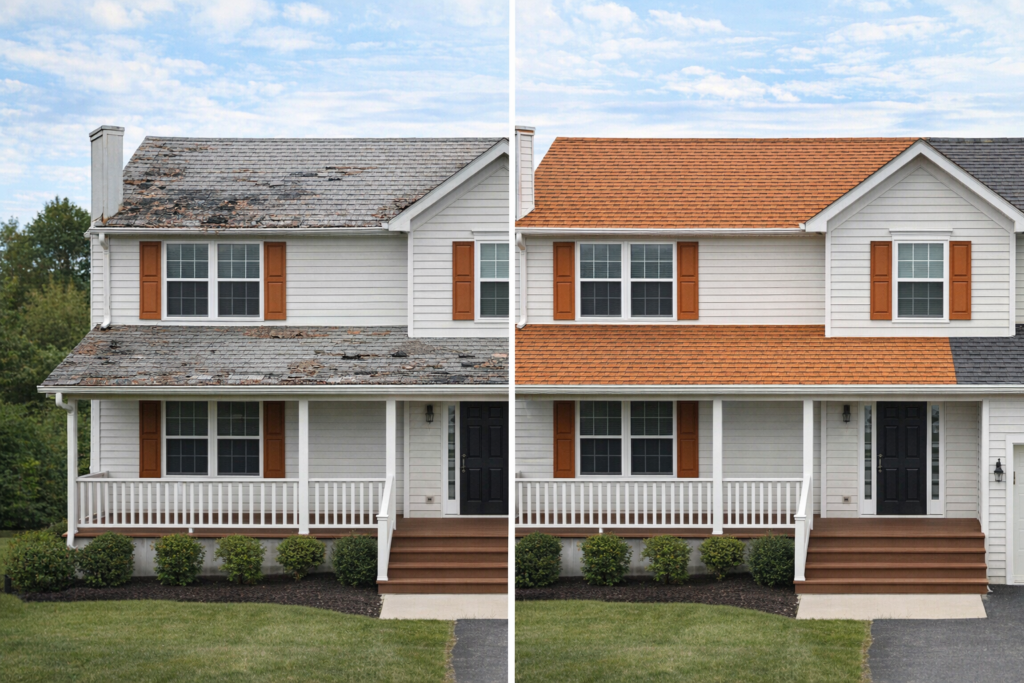
Repair your roof when the damage is contained to one area, the roof is under about 15 years old, and the wood decking underneath is still dry and solid. Replace it when the roof is near the end of its lifespan, problems keep showing up in different spots, or a repair would cost more than about a quarter of what a new roof would.
That second part trips people up. A $1,200 repair on a roof with 15 good years left is money well spent. The same $1,200 repair on a 22-year-old roof is a down payment on a problem you’ll be paying for again next spring. Age changes the math more than the size of the leak does.
There’s also a pattern worth naming: the serial repair. If this is your third repair call in four years, and each one was in a different spot, your roof is telling you something the individual repairs can’t. Scattered failures are a system problem, and at that point the money going into patches is money that should be going into the replacement you’ll need anyway.
If you’re not sure which side of the line your roof is on, a roofing contractor in Hershey, PA can tell you in one inspection. A good one will also tell you when a repair is genuinely enough. We turn down replacement jobs every year because a $600 flashing fix was all the roof actually needed. That homeowner calls us back when the replacement is finally due, which is the whole point.
The PA 25% roof rule: when the decision is made for you
Here’s the rule almost nobody explains. Some Pennsylvania municipalities and insurance policies apply what’s called the 25% rule: if more than 25% of a roof (or one roof plane) needs repair or replacement to match the existing materials, the entire roof or that plane may need to be replaced rather than patched.
Why does this exist? Matching. Say hail chews up a third of your south-facing slope. Your shingles are 12 years old and that exact color was discontinued in 2019. A patch job would leave a checkerboard roof, and partial repairs across a large area also tend to fail sooner at all the new seams. So the code or the policy says: past a quarter of the surface, do the plane properly.
Here’s a worked example, because the percentages get abstract fast. A typical two-story colonial around here has a roof of about 2,000 square feet, split across two main planes of 1,000 square feet each. A storm damages 300 square feet on the back plane. That’s 15% of the whole roof, but 30% of that plane. Under a matching provision, you’re not patching 300 square feet. You’re re-roofing the full back plane. The repair quote you were expecting just became a half-replacement quote, and if insurance is involved, the claim should be written that way from the start.
What this means for you in practice:
- Measure the damage honestly before assuming a repair. A contractor should walk the roof and give you the affected square footage and percentage per plane, not eyeball it from the driveway.
- If a storm caused the damage, the 25% rule can work in your favor on an insurance claim. Crossing that threshold is often the difference between the insurer paying for a patch and paying for the plane.
- Ask your township. Derry Township, Hershey, and the surrounding municipalities don’t all handle this identically, and your insurance policy has its own language on matching. Two documents decide it: your local code and your policy.
We bring this rule up early with storm-damage customers because it changes the entire conversation. More than once we’ve seen a homeowner about to pay out of pocket for a large “repair” that their policy should have covered as a replacement. The adjuster isn’t going to volunteer that math. Your contractor should.
What each option costs in Pennsylvania
Nobody ranking on Google for this question will give you a number. We will, because we publish the same ranges on our homepage and quote against them every week.
| Option | Typical PA cost | What it covers |
|---|---|---|
| Roof repair | $400 – $1,500 | Localized damage in one area: shingles, flashing, small decking sections |
| Full replacement | $9,000 – $18,000 | Complete tear-off and new asphalt roof on an average-size home; metal and tile run higher |
What a roof repair costs
Most roof repairs in our area run $400 to $1,500. A few missing shingles after a windstorm sits at the low end. Flashing repairs around a chimney, fixing a valley, or replacing a damaged section of decking pushes toward the top of the range. The variables that move the number are the size of the damaged area, the material, and how hard the spot is to reach safely.
Be suspicious of a repair quote given over the phone without anyone on the roof. The visible damage is the symptom. The price depends on what’s under it, and nobody knows that from a driveway photo.
What a full replacement costs in PA
A full roof replacement in Pennsylvania typically runs $9,000 to $18,000 for an average-size home with asphalt shingles, and more for metal or tile. Steep or complicated rooflines, multiple old layers to tear off, and hidden decking damage all push the number up. You’ll see other published ranges (some national cost sites put PA replacements a few thousand higher), but this is what we actually see on quotes in Central Pennsylvania.
Within that range, three things move your number most. Pitch: a walkable 4/12 roof costs less to work on than a steep 10/12 that needs staging and harnesses. Layers: if a previous owner shingled over the old roof instead of tearing off, you’re paying to remove both. Decking: nobody knows its condition until tear-off, which is why a fair contract prices decking replacement per sheet up front instead of surprising you mid-job.
The useful comparison isn’t repair-versus-replacement price. It’s cost per year of roof life. A $1,000 repair that buys 10 more years costs $100 a year. A $14,000 replacement that lasts 25 years costs $560 a year, but it also resets everything: roof repair and installation services on a new roof come with fresh warranties, and you stop paying for patch after patch on a system that’s failing. On an old roof, repairs are rent. A replacement is a mortgage payment on something you own.
Six signs your roof is telling you which one it needs
You can read most of this from the ground or the attic. Here’s what points to repair and what points to replacement:
- Missing or cracked shingles in one spot points to repair. Localized wind damage is the most fixable problem a roof has.
- Granules filling your gutters means replacement is coming. Shingles shed their protective grit heavily in their last few years.
- Curling or cupping shingle edges across the whole roof means replacement. That’s age, not damage, and it can’t be patched away.
- A leak that returns after it’s been fixed points to replacement, or at least a deeper inspection. Repeat leaks usually mean water is traveling under the shingles from somewhere else.
- Daylight showing in the attic, or damp insulation, means get an inspection now. Depending on how far the water traveled this can go either way, but waiting always makes it the expensive way.
- A sagging roofline means replacement, quickly. Sag means the structure underneath is compromised, and no shingle repair fixes that.
One honest caveat: the roof you can see from the driveway is maybe half the story. The decking, underlayment, and flashing do the real waterproofing work, and their condition is what an inspection actually determines. We’ve walked roofs that looked terrible from the street and needed a $500 fix, and roofs that looked fine and were rotted through underneath. The street view lies in both directions.
How long roofs last in Pennsylvania — and why ours age faster
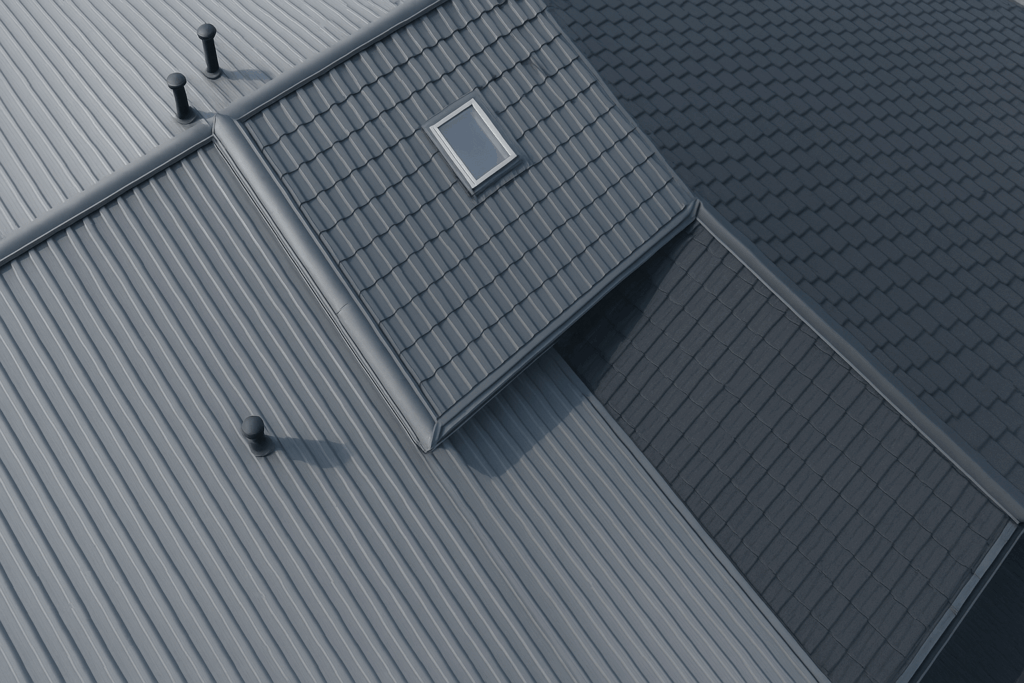
Asphalt shingle roofs are rated for 20 to 30 years, but Central Pennsylvania sits in freeze-thaw country, and that rating assumes gentler weather than we get. Water works into tiny gaps in and around shingles, freezes overnight, expands, and pries the gap wider. Then it does it again, forty or fifty times a winter. Add humid summers, the occasional hail cell coming across Dauphin County, and nor’easter wind, and a realistic local range for builder-grade three-tab shingles is closer to 18 to 25 years.
Material changes the equation. Architectural (dimensional) shingles, the standard on most replacements now, hold up better here and push toward the upper end of that range. Metal roofing runs 40 to 70 years and shrugs off freeze-thaw cycles, which is why you see it on so many farmhouses around Lebanon and Lancaster counties that haven’t been re-roofed in living memory. It costs more up front, but on a forever home the per-year math can favor it.
Either way, the lifespan number matters for the repair-or-replace call. A 17-year-old roof in Arizona might have real life left. A 17-year-old roof in Hershey that’s been through seventeen freeze-thaw winters is a candidate for replacement even if it looks passable from the street, because the failures start under the surface.
The best time of year to replace a roof in PA
Late spring through early fall is the working window here. Shingle adhesive strips need warmth to seal properly, so installations between roughly May and October bond best. Fall is the busiest season, because everyone wants the roof done before winter, which means longer waits and less scheduling flexibility. Prices from a reputable contractor don’t usually swing much by season, but your choice of week does.
Is October too late? No. October is fine, and even November works in a mild year. Modern shingles can be installed in colder weather with hand-sealing, so a December installation isn’t impossible. It’s just slower, more weather-dependent, and not the position you want to negotiate from. What you actually want to avoid is emergency-replacing a failed roof in January, when cold complicates everything and you’re paying for urgency. So the practical advice: if you already know your roof is on its last few years, book the replacement for late spring or summer, while you still control the calendar.
And if you’re reading this in winter with an active leak? Get it repaired now and plan the replacement for spring. A proper temporary repair in December beats a rushed replacement in a snowstorm every time.
Frequently asked questions
Is it better to repair or replace a roof?
Repair is usually the better choice when the damage covers a small area, the roof is under 15 years old, and the decking underneath is dry and solid. Replacement makes more sense when the roof is near the end of its lifespan, damage is spread across multiple areas, or repairs would cost more than a quarter of what a new roof would. A roofing quote in Hershey, PA settles it either way. The answer is on the roof, not in an article.
Can I replace just half of my roof?
Sometimes. Roofers can replace a single roof plane (one side or section) when damage is contained to it, and that costs less than a full replacement. The catch is matching: if your shingles are older, the exact color and style may no longer be manufactured, and a half-new roof can look mismatched and complicate future warranty claims. And if more than 25% of a plane needs work, the 25% rule can force a full-plane replacement anyway under some PA codes and insurance policies — see the section above.
Does homeowners insurance cover roof replacement in PA?
Usually only for sudden damage from a covered event, like wind, hail, or a fallen tree — not for a roof that simply wore out. Pennsylvania policies also differ on whether they pay full replacement cost or deduct for the roof’s age (that’s the “depreciation” you’ll see in claim paperwork). Document storm damage with dated photos before any repairs are made, and get a contractor’s written assessment to support the claim. If the damage crosses the 25% threshold on a plane, say so in the claim.
Get a straight answer about your roof
Reading about roofs gets you to an informed guess. An inspection gets you to an answer. If you’re in Hershey, Dauphin County, or the surrounding area, schedule a roof inspection and we’ll tell you plainly which side of the repair-or-replace line your roof is on, what it’ll cost, and, just as important, when a repair is genuinely all you need. You’ll get a real number instead of a phone-quote guess, and if the honest answer is “this roof has five good years left,” that’s the answer you’ll get.
Want the cost details first? Our estimates cover both options side by side, so you can compare the repair number against the replacement number for your actual roof instead of a national average.